Disconnection from abilities and kin
The HumansDisconnection from abilities and kin marks the narrator’s decisive break with his former existence: he asks to surrender the gifts that distinguish him from humans so that he can remain on Earth, and the Vonnadorian voice disconnects him. The choice turns an abstract wish to belong into an irreversible bodily condition. He becomes mortal, loses the possibility of crossing the universe, and is left without a reply from the kin whose authority once shaped his life.
The request to remain
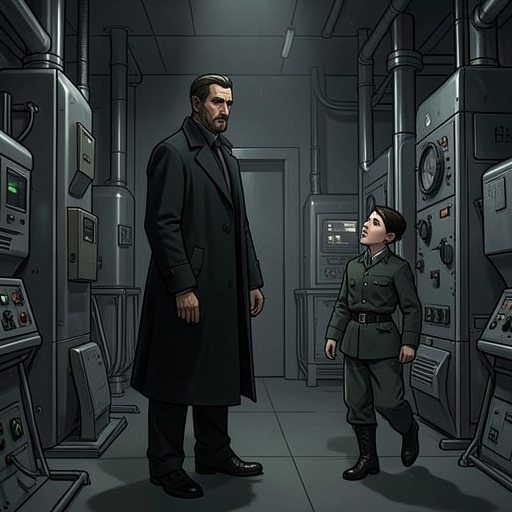
The decision begins in the dark, after the narrator has watched Isobel Martin, author of the unfinished novel, and wanted to protect her. He gets out of bed because he has something to do. His declaration that he is staying on Earth is met with an objection: his gifts are not made for the planet, and humans will become suspicious. Rather than accept a return to his former nature, he asks to be disconnected. His objection is not merely practical. He says his mind cannot be interfered with, asserting a claim over himself against the power of the beings who can reach into it.
The voice asks whether he wants to retain the chance to take other forms or return to his original nature. He refuses those possibilities and says he wants to be human, or as close to human as possible. The request is unprecedented in the history he shares with his kin: no one before him has asked to lose the gifts. His choice therefore breaks not only with his own past but with an assumed collective norm. The exchange makes clear that what he experiences as a route toward belonging appears to his kin as an incomprehensible loss.
A chosen punishment
The voice spells out the physical consequences before granting the request. He will inhabit a body that cannot regenerate, grow old, contract diseases, and feel pain. More troublingly, he will know that this suffering is the result of his own choice. The voice calls it the ultimate punishment and insists that asking for it does not make it any less punitive. This framing exposes the divide between the narrator’s valuation of human life and the Vonnadorian understanding of vulnerability: the very conditions he accepts as part of becoming human are presented to him as a penalty.
The disconnection is then made real. His gifts are gone, and he is human. If he claims to have come from another planet, he will have no proof and will be believed insane; from the kin’s perspective, his place can easily be filled. He counters that replacement would waste resources and that the mission has no point, but his repeated attempts to ask whether the voice can hear him receive no answer. The exchange ends in silence. Losing his abilities thus also means losing the communication and standing he had within his former community; the break is not simply a change of capacity but a severance from those who had defined his place.
The body confirms the change
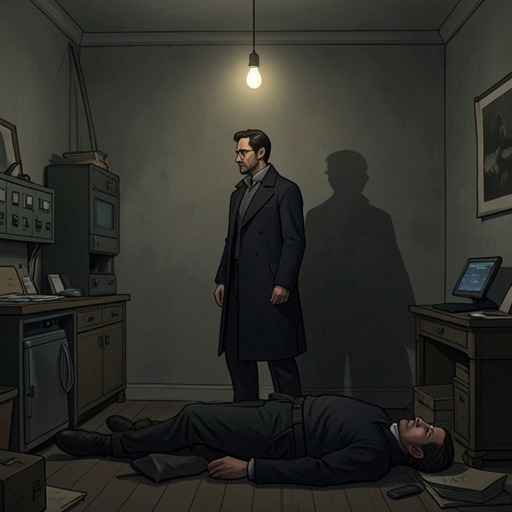
The cost becomes concrete after an episode marked by the phrase neuroadaptive activity. The narrator wakes in hospital with serious physical pain for the first time in his life. Isobel Martin, author of the unfinished novel, has stayed beside him for a while, asleep in a plastic chair, but has been told to go home. Alone at night, he experiences his helplessness as a human being and longs for Earth to turn faster, so that night might give way to day. He had known night on other planets, but Earth’s seems to him the darkest and loneliest. The description makes his new condition intimate: mortality is no longer a prediction from the voice but pain endured in a hospital bed, in the dark, without the power to alter his body or surroundings.
He tries to console himself with prime numbers, naming 73, 131, 977, 1213, and 83719. He thinks of each as indivisible, like love, except by one and itself, but struggles to think of higher primes. Even his mathematical skill, once central to his exceptional abilities, has abandoned him. The episode joins physical and intellectual loss: the body hurts, while a faculty he relied on falters with it. His wish for a human life has not spared him the disorientation of discovering what human limitation feels like from within.
What remains after severance
A doctor observes that it seems something has been taken out of the narrator’s brain and that his cells are trying to compensate, although nothing appears to have been removed or damaged. The narrator knows the doctor’s uncertainty cannot reach the truth: something has been taken, but no human, Earth-based doctor could understand what it was. He endures the difficult test, which confirms that he is as good as human, and receives paracetamol and codeine for pain that continues to pulsate in his head and face. Eventually, he goes home. The clinical encounter offers no explanation for the transformation; it registers its effects through ordinary examination, puzzlement, and medication.
Later, when Gulliver asks about his arrival, the narrator distinguishes arriving from travelling. He explains that there is no greater chance of crossing the universe for him now than for any other human: this is who he is, and where he must stay. Gulliver frames the decision as giving up the universe for a life on the sofa, and the narrator admits that he did not understand that consequence at the time. The admission does not undo his choice. It shows how the scale of what he surrendered only becomes legible afterward: the severance that began as a request to stay with those he wants to protect also closes off the universe itself.